1. What is a massage gun?
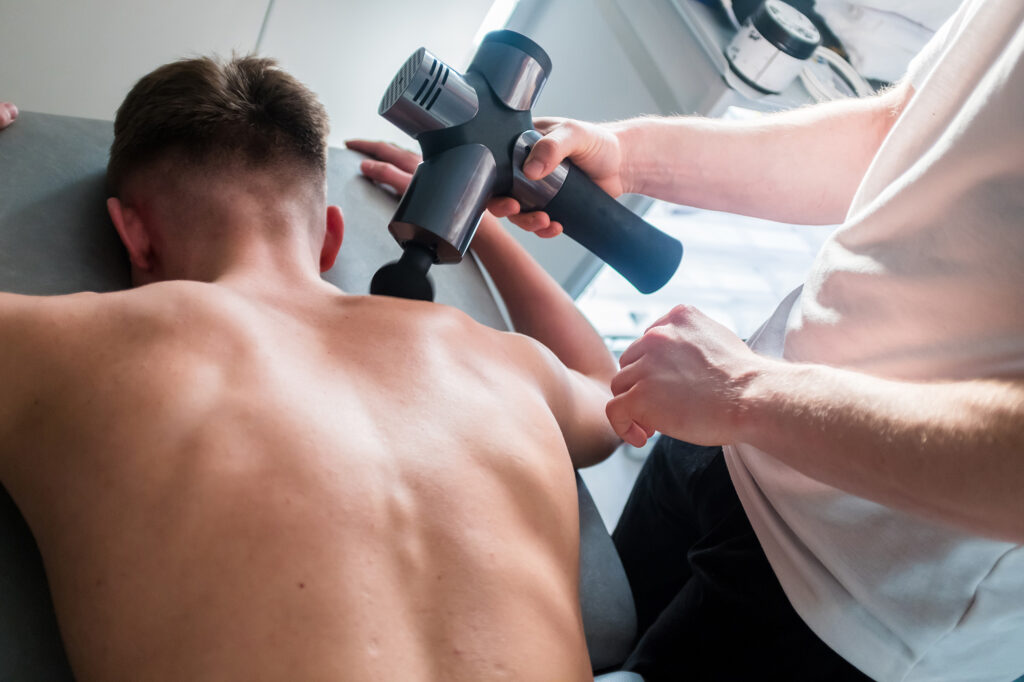
A massage gun is a handheld device that gives you the therapeutic advantages of a massage, applied by yourself, without having to visit your own environment. It has the appearance of a power drill and generally will have multiple, interchangeable attachments and different settings to apply in different locations of your body for the desired aim.
2. How do they work?
It works the same way a massage would. It provides deep stimulation to the soft tissues facilitating the drainage of excess fluid and waste products through the lymphatic and venous system. it also stimulates the release of endorphins and hormones that will enhance your feeling of well-being.
3. Are there different types of massage guns? (percussive, vibration)
Massage guns use a combination of percussion and vibration, sometimes simultaneously, to achieve its effect. Vibration works at a superficial level whereas percussion has deeper penetration and can be more useful in bigger muscles groups such as in the thigh, calves and upper arm. A combination of both, in different settings, is the most useful way to use it.
4. Where you should use a massage gun?
The best effect is achieved when used in muscle groups where you may be feeling soreness or tension. It is very useful to relieve tension in the lower back, trapezius and back of the neck. It assists in recovery of muscles after exercise: thighs, calves, upper arms and forearms. Small localised areas of tension are also ideal locations for its use.
5. Where you should avoid using a massage gun?
You should avoid using a massage gun directly over bones or joints. It is also important to avoid the front of the neck as it can cause damage to the big vessels that go up into your brain. Areas where nerves are close to the surface, such as the inside of your elbow or outside of your knee are also best avoided. Using it in these areas can cause nerve damage. A sudden sensation of electric shock would be a warning sign of this happening.
6. When should you use a massage gun?
Massage guns can be used before physical activity to warm up the muscles. Short applications of 30 to 60 seconds will help warm up the muscles and increase flexibility in your joints. This, however, should be combined with the traditional warmup sequence of gentle cardio and stretches. Or after exercise, to reduce swelling and soreness induced by exercise also known as Delayed Onset Muscle Soreness. For this indication applications should be longer, typically two or three minutes in each muscle group.
7. How to use it?
Start the gun away from your body and then apply it. Always start with the lower settings and light pressure and increase progressively. This will avoid sudden action that might cause damage. If you haven’t used one before use it for short periods of time in each muscle group, 15 to 20 seconds. Once you get used to the effect you can increase the time you spend on the muscles. It is important not to overdo it. Skin redness is a marker for increased blood flow. Once you see it move on to another muscle group.
8. Should you use oiled or dry?
You can combine the use of massage guns with essential oils. These will have added therapeutic benefit depending on which oil you use. Your pharmacist or natural therapist can advise you on which is the best for your desired aim.
9. Tips for different body areas (shoulders, calves, hips, neck, back)
different muscle groups will require different attention. This means the use of the different attachments in different settings.
Thighs, calves and gluteal area would benefit from the use of the ball attachment. It’s bigger size will provide deeper tissue penetration. Four trigger points or areas of point tenderness the bullet had would be more effective. Calves and the upper arms will benefit from the use of the fork attachment. In any location start with low settings and for short periods of time. Increase progressively when you feel that you are comfortable with the feeling.
10. Are massage guns worth it?
Although the initial use was in high-end athletes they have become more popular. There is now widespread use of them for amateur athletes and general population. Owning a massage gun allows you to have your own massage therapist at home, available at any time. It is not a substitute but a complement, for those times when seeing your therapist is not possible or convenient.
11. Benefits?
The combination of vibration and percussion kneads the muscles and stimulates blood flow. This helps reduce muscle stiffness, break up scar tissue and minimise muscle soreness and tension. It also enhances your sense of well-being improving your mood, energy and vitality and sleep patterns. In essence, the same benefits as you would get from a good therapeutic sports massage, always at your disposal.
12. Are they good for alleviating pain?
It is a very good way to reduce tension and muscle stiffness that may be provoked either by exercise or lack of it. Sitting at a desk working for hours on end tends to produce muscle tension, especially in the back of the neck and lower back. Both vibration and percussion are effective in reducing muscle spasm and pain.
13. Can you use a massage gun while pregnant/ with any other medical problems?
Therapeutic massage can reduce pregnancy discomforts and pain. Lower back pain is common during pregnancy and applied judiciously it is effective at reducing it. It should be avoided directly over the abdomen or if you have had any complications during pregnancy such as deep-vein thrombosis, pre-eclampsia or any other condition. There is very little evidence of the safety of these devices during pregnancy and in case of doubt best consult with your doctor.
People taking blood thinners should avoid the use of massage guns as they can provoke bruising. They are also probably best avoided in areas where there are implants, metallic or otherwise.
Carlos Cobiella – Consultant Orthopaedic Surgeon, The Shoulder Practice